16 NOV, 2026 • Case
From innovation to action Dutch-French cooperation strengthens Europe’s capacity to act
On 15 October, 180 Dutch and French business, government and research leaders gathered at the Malietoren in The Hague to mark three years of the Dutch-French Innovation and Technology Pact. Hosted by VNO-NCW and MEDEF, the Summit focused on the next phase of the Pact: turning a strong network for cooperation into concrete projects, investment and greater European capacity to act.
Over the past three years, more than 500 people and 200 organisations have taken part in over 65 meetings, missions, conferences and workshops. In four breakout sessions, the Pact’s working groups reported on progress and identified opportunities for bilateral cooperation in AI and semiconductors, quantum technologies, cyber security, hydrogen, sustainable aviation, food and nutrition. The Summit showed that this cooperation has created a strong foundation. The next step is to use that foundation to deliver.
A changing world requires stronger European cooperation
When the Pact was launched in 2023, its main objective was to connect the innovation ecosystems of France and the Netherlands more closely. Since then, the world has changed profoundly. Geopolitical tensions, disrupted supply chains, technological competition and growing security risks have made clear that Europe cannot take its prosperity, security or access to critical technologies for granted. Technology and artificial intelligence are rapidly changing the competitive position of countries and continents. Europe has world-class knowledge, companies and research institutions, but it must become better at bringing innovation from lab to fab to market, build resilient value chains and mobilise its own capital.
This is not a call for Europe to turn inward. It is a call to strengthen Europe’s ability to act: to develop and scale strategic technologies in Europe, reduce unnecessary fragmentation and build stronger links between economic competitiveness and security. Europe does not need to compete only by building the largest AI models. It can also lead by applying AI at scale in sectors where European companies already have strong capabilities, strengthening productivity, innovation and competitiveness.
Achieving this requires a supportive policy environment, workable regulation and the infrastructure, skills and investment needed to scale AI applications. A closer Dutch-French cooperation is part of this wider effort to build a more sovereign, secure and competitive Europe: a Europe that can develop, invest and innovate together. We need more coalitions of the willing.
Complementary strengths and shared ambitions
France and the Netherlands bring complementary strengths. The Netherlands has particular expertise in semiconductors, photonics and quantum technology, a strong entrepreneurial culture and a tradition of connecting companies, knowledge institutions and international markets. France brings industrial scale, technological capabilities, global companies and substantial public and private financing capacity. By combining these strengths, both countries can move faster and create greater European scale.
From shared priorities to concrete projects
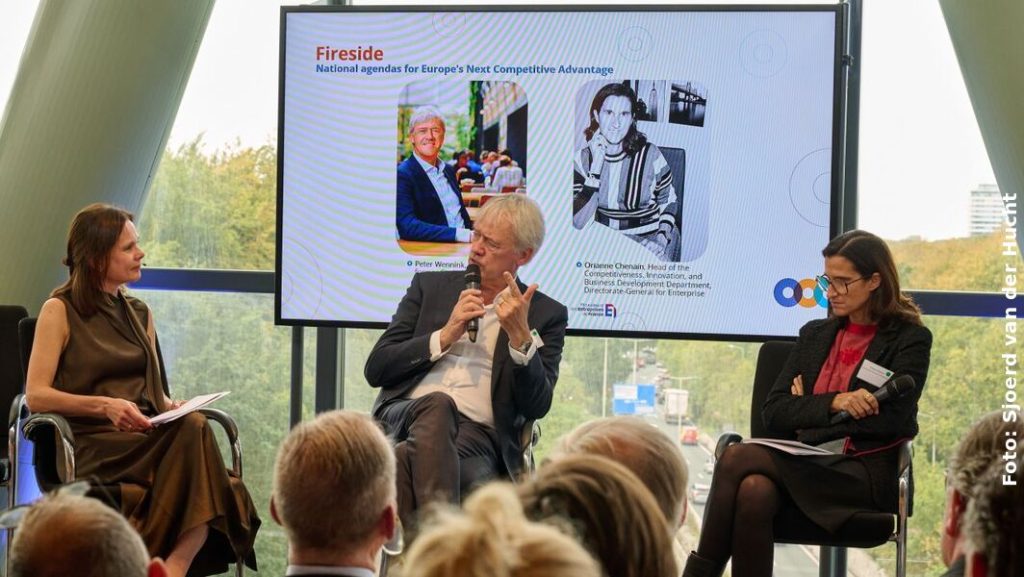
The need to move from intentions to implementation was a central theme throughout the Summit. Peter Wennink stressed that successful cooperation requires a clear shared objective and trust based on transparency. Partners must be willing to share risks and rewards, learn quickly and act before every detail is settled. His message was simple: “Go.” Start together, prove that it works and then scale it in Europe.
The Pact’s working groups presented initiatives in agritech, physical AI, sustainable aviation, hydrogen and energy. These examples show how the Pact can connect ecosystems and turn bilateral cooperation into projects with wider European potential.
Mobilising investment for European scale-up
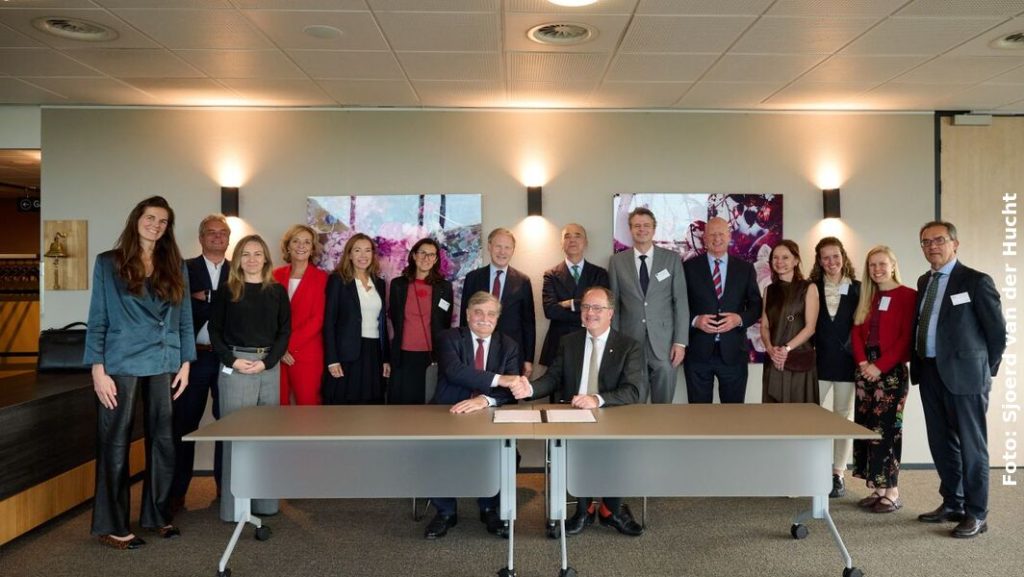
A concrete step was taken with the signing of a memorandum of understanding between Bpifrance and Invest-NL. Rinke Zonneveld and Pascal Lagarde emphasised the need to mobilise more European institutional and private capital for innovative companies and scale-ups. Building “Made in Europe” capacity will require excellent research and entrepreneurship, patient capital, coordinated instruments and closer cross-border investment partnerships.
What comes next
Over the coming year, each working group will translate the priorities discussed at the Summit into a small number of bankable projects. This will be central to the Dutch-French governmental meeting in Paris on 2 December 2026 and will feed into the next Pact Summit, to be hosted by MEDEF.
Success should be measured not by the number of meetings or strategies, but by the projects launched, private investment mobilised, technologies scaled and European companies helped to grow. Three years after its launch, the Pact is entering its most important phase: stepping up cooperation to turn Europe’s strengths into European capacity to act.
The Dutch-French Innovation Pact Interested? Read more about The Dutch-French Innovation Pact